

Paediatric Imaging: Essential Information for Parents About Children's Radiology Services
Paediatric imaging is a crucial aspect of modern healthcare, providing essential insights into children’s health through various scanning techniques. Parents often find themselves navigating a complex landscape of medical procedures, and understanding these imaging methods can significantly alleviate concerns. This article aims to equip parents with vital knowledge about children’s scans, including the types of imaging available, safety measures, preparation guidelines, and the booking process. By addressing common questions and concerns, we hope to empower parents to make informed decisions regarding their child’s health. Key sections will cover common types of paediatric imaging scans, radiation safety, preparation for imaging procedures, and how to book appointments effectively.
What Are the Common Types of Paediatric Imaging Scans?
Paediatric imaging encompasses several types of scans that help diagnose and monitor various health conditions in children. These imaging techniques are designed to be safe and effective, ensuring that healthcare providers can obtain the necessary information without causing undue stress to young patients. The most common types of paediatric imaging include X-rays, MRI scans, and CT scans, each serving distinct purposes in the diagnostic process.
Understanding Children's X-Ray Procedures and Their Uses
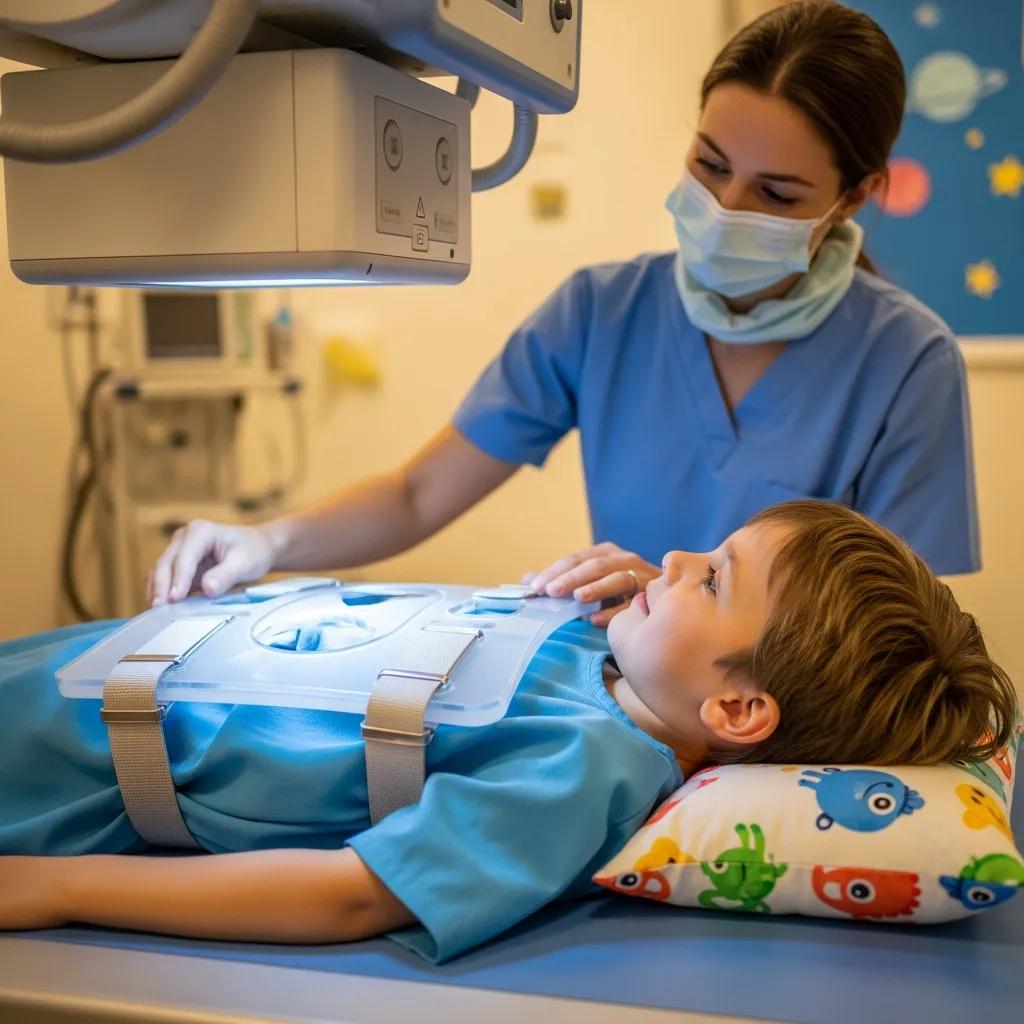
Children’s X-ray procedures are commonly used to diagnose fractures, infections, and other conditions affecting bones and soft tissues. The process involves positioning the child in front of an X-ray machine, which emits a small amount of radiation to create images of the internal structures. X-rays are quick, non-invasive, and typically completed within minutes, making them a preferred choice for many paediatric assessments. Understanding the purpose and process of X-rays can help alleviate any anxiety parents may have about the procedure.
How Do Paediatric MRI Scans Work and When Are They Recommended?
Paediatric MRI scans utilize powerful magnets and radio waves to create detailed images of organs and tissues without the use of ionizing radiation. This imaging technique is particularly useful for assessing brain, spinal cord, and joint conditions. MRI scans are recommended when a more comprehensive view of the internal structures is needed, especially in cases where X-rays may not provide sufficient information. The procedure can take longer than an X-ray, often requiring the child to remain still for an extended period, which may necessitate sedation in some cases.
How Is Radiation Safety Ensured in Children's Imaging?
Ensuring radiation safety in children’s imaging is a top priority for healthcare providers. Various protocols and technologies are in place to minimize exposure while still obtaining high-quality images. Understanding these safety measures can help parents feel more confident about the imaging process and its implications for their child’s health.
What Are the Risks of Radiation in Paediatric Imaging and How Are They Minimized?
The primary risk associated with radiation in paediatric imaging is the potential for increased cancer risk over a child’s lifetime. However, healthcare providers take extensive precautions to minimize exposure. Techniques such as using the lowest possible radiation dose, employing advanced imaging technologies, and adhering to strict guidelines help ensure that children receive safe and effective imaging. Parents should discuss any concerns with their child’s healthcare provider to understand the specific measures in place.
Further emphasizing the comprehensive approach to child safety, detailed guidelines and specialized techniques are continuously developed to ensure optimal care during pediatric radiological procedures.
Pediatric Imaging Safety & Parental Guidance
This chapter presents an in-depth overview of safety measures, legislative frameworks, and specialized approaches required in pediatric radiological procedures. It begins by outlining the foundational principles of pediatric imaging, including the concepts of justification, optimization, and legislation that govern the safe use of radiation in children. The chapter further provides practical guidance for imaging technologists, healthcare professionals, and caregivers, including parents, to optimize the pediatric imaging experience and reduce psychological stress for young patients. Topics such as pediatric patient preparation, the use of immobilization tools, and technical adjustments are thoroughly discussed to improve imaging quality while minimizing exposure.
General Safety and Pediatric Care in Radiological Procedures, D Prakash, 2025
What Advances in Low-Radiation Techniques Benefit Child-Friendly Imaging Centres?
Recent advancements in imaging technology have led to the development of low-radiation techniques that significantly reduce exposure while maintaining image quality. Innovations such as digital X-rays and advanced MRI protocols allow for safer imaging options tailored to children’s needs. These advancements not only enhance safety but also improve the overall experience for young patients, making imaging procedures less daunting.
How Can Parents Prepare Their Child for Imaging Procedures?

Preparing a child for imaging procedures can help reduce anxiety and ensure a smoother experience. Parents play a crucial role in guiding their children through the process, making it essential to understand the necessary steps for effective preparation.
Indeed, research consistently highlights the positive impact of thorough preparation and education in mitigating children’s anxiety and improving outcomes during radiological procedures.
Preparing Children for Radiology: Reducing Anxiety
Children attending hospital for radiological procedures can experience uncertainty, anxiety and distress; this can result in sub-optimal experiences for children, poor scan quality and the need for radiological procedures to be rescheduled or sedation to be used. The preparation and education of children before clinical procedures has been shown to have a positive influence on procedural outcomes. This scoping review aimed to locate and examine the evidence relating to non-invasive interventions and methods to prepare, educate and familiarise children for radiological procedures within a healthcare setting.
Interventions and methods to prepare, educate or familiarise children and young people for radiological procedures: a scoping review, L Bray, 2022
What Are the Step-by-Step Preparation Guidelines for Children's X-Rays and MRIs?
When preparing for children’s X-rays and MRIs, parents should follow these guidelines:
- Explain the Procedure: Use simple language to explain what will happen during the scan, helping to alleviate fears.
- Dress Appropriately: Ensure the child wears comfortable clothing without metal fasteners, as these can interfere with imaging.
- Follow Dietary Instructions: For MRI scans, parents may need to follow specific dietary guidelines, such as fasting before the procedure.
These steps can help children feel more at ease and ready for their imaging appointment.
When Is Sedation Needed in Paediatric Imaging and What Should Parents Know?
Sedation may be necessary for certain imaging procedures, particularly MRI scans, where the child must remain still for an extended period. Parents should discuss the need for sedation with their healthcare provider, who can explain the process, potential risks, and benefits. Understanding the sedation process can help parents feel more comfortable and prepared for their child’s imaging experience.
While sedation is sometimes necessary, ongoing advancements and specialized techniques are also being explored to facilitate MRI scans in children without the need for sedation whenever possible.
Non-Sedation MRI Strategies for Children
Given the increasing use of MRI in the pediatric population, the need for sedation in MRI performed in young children is a topic of growing importance. Although sedation is generally tolerated well by children, the financial and operational impacts of anesthesia on MRI workflow, as well as potential adverse effects of anesthetic medications, highlight the need to perform MRI in children without sedation whenever possible. This review focuses on current techniques to facilitate non-sedation MRI in children, including exam preparation with MRI simulation; asleep but not sedated techniques; awake and relaxed techniques using certified child life specialists, animal-assisted therapy, a child-friendly environment and in-scan entertainment; and non-sedated MRI protocol modifications such as shorter scan time, prioritizing sequences, reducing motion artifact, noise reduction, limiting use of gadolinium, employing an open MRI and modifying protocols.
Strategies to perform magnetic resonance imaging in infants and young children without sedation, C Jaimes, 2022
How Do Parents Book Paediatric Imaging Appointments and What Should They Expect?
Booking paediatric imaging appointments can be straightforward when parents know what to expect. Understanding the process can help alleviate any concerns and ensure that the necessary steps are taken for a successful appointment.
What Is the Process for Booking Children's Radiology Services at Child-Friendly Centres?
To book children’s radiology services at child-friendly centres, parents typically need to:
- Obtain a Referral: A referral from a healthcare provider is often required to schedule an imaging appointment.
- Contact the Imaging Centre: Parents can call the centre to inquire about availability and specific requirements for the procedure.
- Provide Necessary Information: Be prepared to provide the child’s medical history and any relevant insurance information.
This process helps ensure that the child receives the appropriate care tailored to their needs.
What Are the Typical Costs and Insurance Considerations for Paediatric Ultrasound Procedures?
The costs associated with paediatric ultrasound procedures can vary based on the type of scan and the facility. Parents should check with their insurance provider to understand coverage options and any out-of-pocket expenses. Many imaging centres offer transparent pricing and can assist parents in navigating insurance considerations, ensuring that financial aspects do not hinder access to necessary care.