
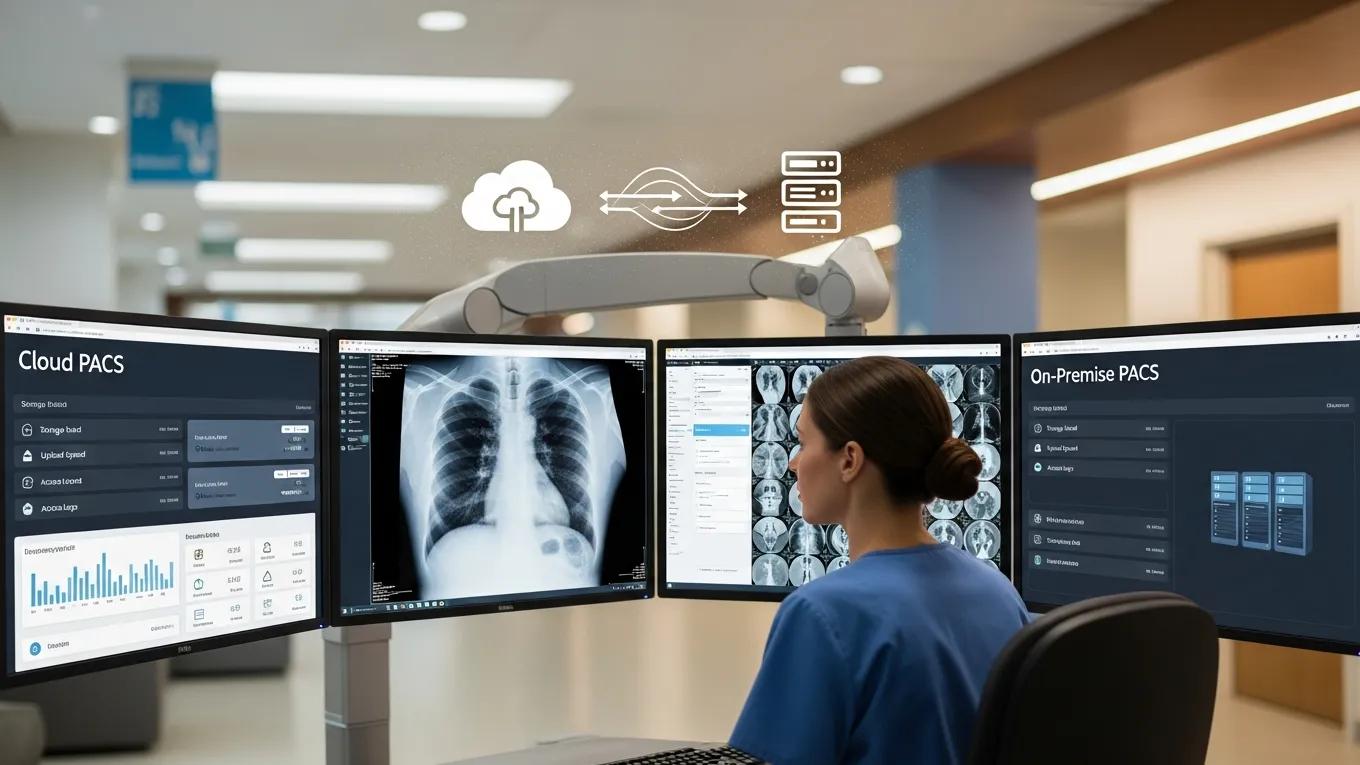
Cloud PACS vs On-Premise PACS: Comprehensive Guide for South African Clinics to Optimize Radiology Image Management
By Tesla Radiological Services Team, Tesla Radiological Services
The increasing demand for efficient image management systems in the healthcare sector has led to a critical comparison between Cloud PACS and On-Premise PACS solutions. This article aims to provide South African clinics with essential insights into these two radiology image management systems, focusing on their benefits and drawbacks. By understanding the capabilities and functionalities of these systems, clinics can make informed decisions to optimize their imaging processes. As advancements in digital technology continue to transform healthcare, recognizing the implications of adopting either Cloud or On-Premise PACS becomes crucial. This guide will explore the advantages of Cloud PACS, the key features of On-Premise PACS, and how both systems compare in improving clinical workflow efficiency. Additionally, we will address the challenges clinics face and evaluate the deployment model that best aligns with their needs.
What Are Cloud PACS Systems and Their Benefits for South African Clinics?
Cloud PACS (Picture Archiving and Communication System) revolutionizes radiology by offering scalable and accessible solutions through cloud storage. These systems enable healthcare professionals to store, retrieve, and share medical images efficiently, significantly improving patient care. The primary benefit of Cloud PACS for South African clinics lies in its flexibility and cost-effectiveness, reducing the need for substantial upfront investments in hardware and IT infrastructure. Cloud PACS also facilitates remote access for healthcare providers, enhancing collaboration and consultation, especially in rural areas.
How Does Cloud PACS Enhance Scalability and Disaster Recovery?
Cloud PACS enhances scalability by allowing clinics to increase storage and processing capabilities as demand grows, ensuring that they can keep pace with expanding imaging needs. This flexibility is particularly useful for clinics experiencing fluctuations in patient volume or those planning to grow their services. Additionally, disaster recovery is made easier, as data is stored off-site, reducing the risk of data loss due to local incidents. For example, if a clinic faces a power outage or hardware failure, images remain safe on the cloud, with the ability to restore data seamlessly.
High Availability Hybrid Cloud Architecture for Hospital Information Systems, PACS, and Disaster Recovery
resilient, scalable, and compliant hybrid cloud architectures locations improve disaster recovery capabilities to the extent Systems (PACS), and laboratory management platforms, are
HIGH AVAILABILITY HYBRID CLOUD ARCHITECTURE FOR HOSPITAL INFORMATION SYSTEMS, N Lutfi, 2026
What Security Measures Ensure Data Protection in Cloud PACS?

Data security is a top concern for healthcare providers using Cloud PACS. Providers implement robust measures such as data encryption methods, ensuring that patient information remains protected during transmission and storage. Access control protocols further enhance security by limiting data access to authorized personnel only, significantly reducing the risk of data breaches. Compliance with local regulations, including the Protection of Personal Information Act (POPIA) in South Africa, ensures that patient privacy is maintained, giving clinics confidence in the security of their cloud-based systems.
Cloud-based ERP Systems: Flexibility, Data Privacy, and POPIA Compliance in South Africa
Cloud-based ERP systems offer enhanced flexibility and concerning data privacy (eg, POPIA, akin to GDPR but with local compliance significantly mitigates complexity and uncertainty. Disruptive Technology Adoption for Sustainable Digital Transformation in South Africa’s
Manufacturing Sector, I Ohiomah, 2026
What Are the Key Features and Advantages of On-Premise PACS Solutions?
On-Premise PACS systems provide clinics with local control over their imaging data and IT infrastructure, ensuring that critical information is kept on-site. This setup can lead to enhanced reliability, as clinics do not rely on internet connectivity to access their medical images. Additionally, On-Premise systems often allow for customization, enabling clinics to tailor their solutions in line with specific operational requirements.
How Does On-Premise PACS Provide Local Control and Reliability?
The primary advantage of On-Premise PACS is the control it affords clinics over their data management and storage processes. By housing their systems locally, clinics can ensure constant access to data without the risks associated with internet outages. Furthermore, they have the freedom to customize their software and hardware configurations to suit their workflows, enhancing operational efficiency. However, this model requires a significant upfront investment and ongoing infrastructure maintenance.
What Are Typical Cost Considerations for On-Premise PACS Deployment?

When evaluating On-Premise PACS, clinics must consider both setup and operational costs. While initial expenses can be high due to hardware procurement and installation, long-term financial implications may balance out as ongoing costs often involve fewer recurring fees compared to subscription models of cloud services. However, clinics should also be aware that unexpected maintenance costs can arise, necessitating budgeting for potential upgrades and support services.
How Do Cloud and On-Premise PACS Compare in Clinical Imaging Workflow Efficiency?
In assessing the efficiency of clinical imaging workflows, Cloud and On-Premise PACS systems showcase different strengths and weaknesses. Cloud PACS enables instantaneous access and sharing of medical images, significantly speeding up collaboration among healthcare professionals. In contrast, On-Premise PACS provides a stable environment for managing images but may introduce delays in access during peak times or technical issues.
Which PACS Type Offers Better Integration with Healthcare IT Systems?
Cloud PACS typically excels in integration capabilities with existing healthcare IT systems, including Electronic Health Records (EHR) and Radiology Information Systems (RIS). This interoperability facilitates seamless communication between different platforms, enhancing clinical workflows and ensuring that data flows efficiently across systems. Conversely, while On-Premise PACS can also integrate with other healthcare IT systems, the process might require more manual intervention and can be limited by local infrastructure constraints.
What Are the Impacts on Radiology Image Management and Accessibility?
Accessibility is a critical factor when comparing Cloud and On-Premise PACS systems. Cloud PACS providers offer anytime, anywhere access to imaging data, which is essential for real-time diagnostics and consultations. This enhanced accessibility positively impacts diagnostic turnaround times, allowing practitioners to make quicker decisions. In contrast, On-Premise PACS may hinder image management efficiency during outages or when accessing data remotely.
What Challenges Do South African Clinics Face When Implementing PACS Systems?
Despite their advantages, South African clinics must navigate several challenges when implementing PACS systems. Common difficulties include technological barriers, such as inadequate infrastructure or limited internet connectivity in rural areas, and financial constraints that impede the ability to invest in advanced systems. For many clinics, understanding the full scope of PACS implementation and maintenance is a significant hurdle, making expert guidance crucial. expert guidance is crucial.
How Do Infrastructure and Staff Training Affect PACS Adoption?
Infrastructure plays a pivotal role in the successful adoption of PACS systems. Clinics lacking adequate technological foundation face hurdles in implementing these systems effectively. Furthermore, staff training is crucial, as providers must ensure personnel are adept at using the new technologies. Case studies show that clinics investing in comprehensive training programs experience smoother transitions and enhanced operational efficiency post-implementation.
What Regulatory Compliance Issues Must Be Addressed?
Regulatory compliance presents another layer of complexity in PACS adoption. Clinics must navigate various standards and regulations concerning data integrity and patient privacy. Understanding key compliance standards is crucial for avoiding penalties, making it essential for clinics to incorporate compliance considerations into their PACS implementation strategies. Non-compliance can lead to significant legal issues and damage to the clinic’s reputation. Clinics often seek solutions that inherently address these requirements, such as those detailed by reputable providers.
Which PACS Deployment Model Best Aligns with South African Clinic Needs?
Assessing the suitable PACS deployment model depends on several factors specific to the clinic’s operations. Cost analysis, scalability considerations, and security measures are vital for making an informed decision regarding PACS adoption. Each clinic must weigh the benefits of cloud-based flexibility against on-premise control, considering their unique operational demands.
When Is a Hybrid PACS Solution Advisable?
A hybrid PACS solution can be an ideal approach for clinics that require the advantages of both Cloud and On-Premise systems. This model allows for data to be stored in the cloud while enabling critical data access through local servers. Such a configuration can provide the necessary balance between control and flexibility, aligning with diverse operational needs.
How Do Cost and Long-Term Scalability Influence PACS Selection?
When selecting a PACS model, clinics must weigh the cost implications against potential long-term scalability. Cloud solutions often provide a lower initial investment, with the flexibility for future growth, while On-Premise systems may require significant upfront expenditure but may offer long-term savings if planned effectively. Balancing these elements is crucial in ensuring that the selected PACS solution meets both current and future operational requirements.
How Can South African Clinics Leverage Advanced PACS Technologies Offered by X-Ray Docs?
X-Ray Docs provides cutting-edge PACS technologies designed to enhance the imaging workflow of South African clinics. These solutions not only streamline radiology processes but also help clinics optimize their resource allocation effectively. Their comprehensive offerings help clinics achieve a higher standard of medical imaging management, ensuring efficiency and accuracy.
What Appointment Booking and Imaging Services Support PACS Workflow?
X-Ray Docs offers a suite of services that enhance the PACS workflow, including appointment booking systems that facilitate smooth scheduling and patient management. By integrating these services, clinics can ensure that radiology procedures run efficiently, reducing patient wait times and improving overall satisfaction. These integrated services are a key part of maximizing the value derived from a PACS investment.
Which Security and Compliance Standards Are Ensured by X-Ray Docs PACS Solutions?
X-Ray Docs employs stringent security measures to safeguard patient information, including robust data encryption during transmission and storage. Compliance with necessary regulations, such as the Protection of Personal Information Act (POPIA), ensures that clinics can protect their patients’ data effectively, fostering trust and reliability in their services. This commitment to security and compliance builds confidence among healthcare providers.
This comprehensive understanding of Cloud PACS and On-Premise PACS solutions equips South African clinics with the necessary knowledge to optimize their radiology image management systems effectively.