
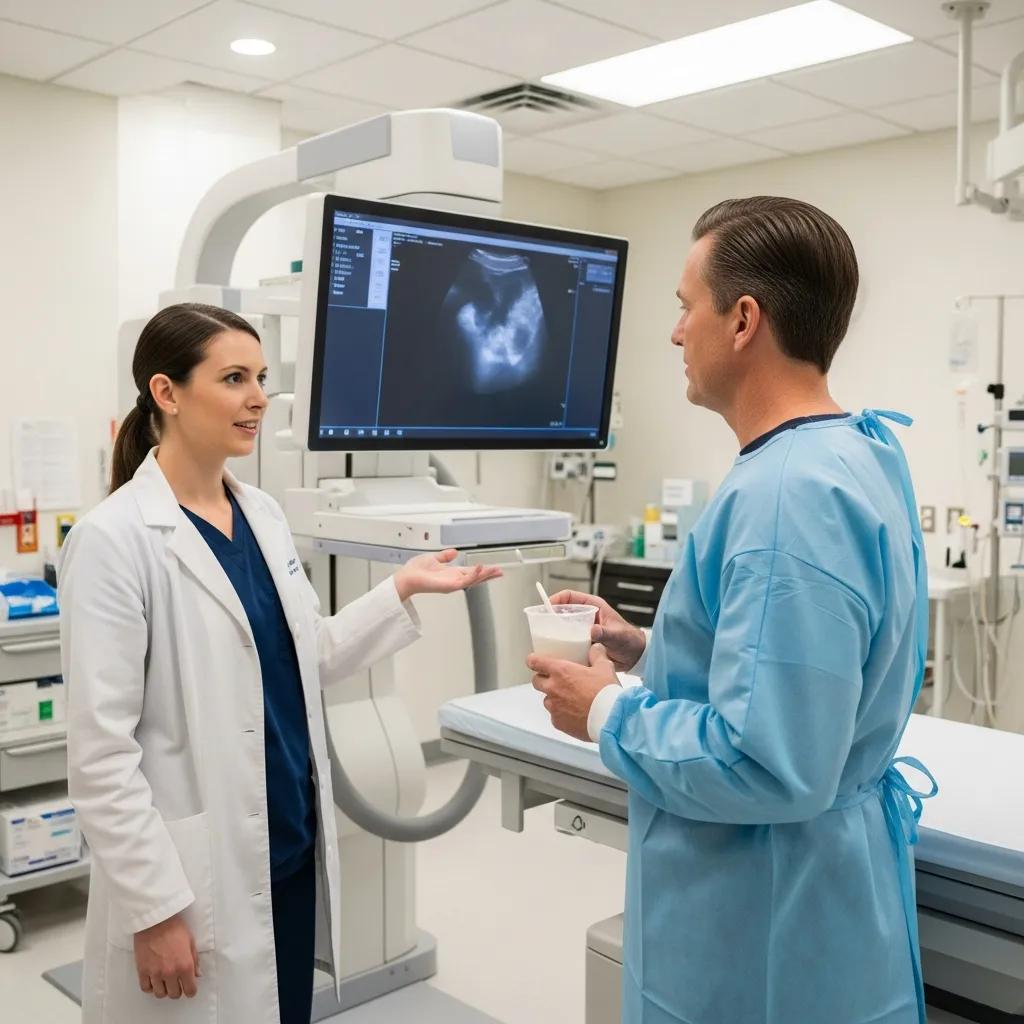
Barium Swallow Test: What It Is, How It Works and What to Expect
Medically reviewed by the radiology team at Tesla Radiological Services, Pretoria, South Africa.
A barium swallow test is one of the most informative and straightforward diagnostic procedures in radiology. If your doctor has referred you for a barium swallow — also called a barium meal, oesophageal study, or upper GI series — this guide walks you through everything you need to know before, during, and after your appointment at Tesla Radiological Services in Pretoria.
What Is a Barium Swallow Test?
A barium swallow test is a contrast study that uses a liquid containing barium sulphate to make the oesophagus, stomach, and upper gastrointestinal (GI) tract visible under fluoroscopy, which is real-time X-ray imaging. This technique allows radiologists to see both the anatomy and the function of these structures as the barium moves through them.
There are different types of contrast studies depending on the area examined:
- Barium Swallow: Focuses primarily on the oesophagus to assess swallowing function and detect abnormalities.
- Barium Meal: Includes the stomach in addition to the oesophagus, providing a broader view of the upper GI tract.
- Upper GI Series: Extends further to include the duodenum and sometimes the small intestine, offering a comprehensive assessment of the upper digestive tract.
Fluoroscopy is essential in these studies because it provides dynamic, moving images that show how the barium travels through the digestive system, helping to identify functional issues as well as structural problems.
Why Is a Barium Swallow Test Performed?
The barium swallow test is commonly performed to investigate a variety of symptoms and conditions affecting the upper digestive tract. Typical indications include:
- Difficulty swallowing (dysphagia)
- Persistent heartburn or gastro-oesophageal reflux disease (GORD)
- Unexplained chest pain that may be related to the oesophagus
- Regurgitation of food or liquids
- Suspected strictures or narrowing of the oesophagus
- Assessment after surgery involving the oesophagus or stomach
- Oesophageal diverticulum (pouches in the oesophageal lining)
- Suspected tumours or masses in the upper GI tract
This test is often preferred as a first-line imaging method because it is non-invasive, does not require sedation, and provides valuable real-time information about how the oesophagus and stomach function during swallowing.
How to Prepare for a Barium Swallow Test
Proper preparation helps ensure accurate results and a smooth procedure. Please follow these patient-friendly guidelines before your appointment:
- Fast for 4 to 6 hours before the test. Avoid eating solid foods during this time.
- You may drink clear liquids up to 2 hours before the test unless otherwise instructed.
- Avoid smoking on the day of the test, as it can affect oesophageal motility.
- Inform us about all medications you are taking, especially those that affect swallowing or motility, as some may need to be paused.
- If you are pregnant or suspect you might be, please notify the radiology team, as fluoroscopy involves X-ray radiation.
- Disclose any allergies, particularly to contrast materials or barium.
- Wear comfortable, loose-fitting clothing without metal fasteners or jewellery that could interfere with imaging.
What Happens During the Barium Swallow Procedure?
On the day of your appointment at Tesla Radiological Services, the procedure will proceed as follows:
- Arrival and Check-in: You will be welcomed and given an overview of the procedure.
- Positioning: You will lie or stand in front of the fluoroscopy machine, depending on the views needed.
- Barium Ingestion: You will be asked to drink 150 to 250 ml of barium sulphate liquid. This liquid coats the lining of your oesophagus and stomach, making them visible on X-ray.
- Real-Time Imaging: The radiologist will observe the barium as it moves through your upper GI tract using fluoroscopy. You may be asked to change positions—standing, lying down, or tilting—to get different views.
- Duration: The entire study usually takes between 20 and 40 minutes. No needles, sedation, or invasive procedures are involved.
What Does Barium Taste Like and Is It Safe?
Barium sulphate has a thick, chalky texture and a mildly unpleasant taste. To improve flavour, it is often mixed with vanilla or strawberry flavouring, but some patients still find it unusual. Despite this, it is safe and well-tolerated.
Barium is not absorbed by the body; it passes naturally through your digestive system and is eliminated in your stools within 1 to 2 days. It has an excellent safety record when used as directed.
Regarding radiation exposure, the amount used during fluoroscopy is comparable to a few months of natural background radiation. At Tesla Radiological Services, we strictly follow the ALARA (As Low As Reasonably Achievable) principle to minimise radiation dose while ensuring high-quality imaging.
What to Expect After the Test
After your barium swallow test, you can expect the following:
- Your stools may appear white or grey for 1 to 2 days due to the barium passing through your system. This is normal.
- Drink plenty of fluids to help flush the barium out and prevent constipation.
- You can eat and drink normally immediately after the test unless otherwise advised.
- If you experience constipation lasting more than 2 days, please contact Tesla Radiological Services or your healthcare provider.
- You will be fully alert after the procedure and may drive yourself home.
When Will You Get Your Results?
Reports from Tesla Radiological Services are typically available within 24 to 48 hours after your test and will be sent directly to your referring doctor. In urgent cases, we can prioritise your report to expedite diagnosis and treatment.
Common findings from a barium swallow or upper GI series include:
- Hiatus hernia
- GORD or reflux disease
- Oesophageal strictures or narrowing
- Pharyngeal pouches (Zenker diverticulum)
- Achalasia and other motility disorders
- Mucosal irregularities or lesions
- Post-surgical anatomy and complications
Frequently Asked Questions
Is the barium swallow test painful?
No, the test is entirely non-invasive and painless. There are no injections or incisions involved.
How long does a barium swallow take?
The imaging study itself takes about 20 to 40 minutes. Please allow up to 1 hour for your entire visit, including preparation and check-in.
Can I drive after a barium swallow test?
Yes, you can drive after the test as no sedation or anaesthesia is used.
What is the difference between a barium swallow and an endoscopy?
An endoscopy involves inserting a camera through the mouth to directly visualise the oesophagus and stomach lining and allows for biopsies. A barium swallow is a non-invasive X-ray imaging test that assesses both the structure and function of the upper GI tract. Often, these tests complement each other.
Is a barium swallow covered by medical aid in South Africa?
Tesla Radiological Services accepts most major medical aids. Please contact our reception to confirm your specific plan or inquire about affordable cash rates.
Book Your Barium Swallow Test at Tesla Radiological Services
Located at Netcare Akasia Hospital, Heindrich Avenue, Pretoria (0118), Tesla Radiological Services offers expert fluoroscopy and contrast studies including barium swallow tests, barium meals, and upper GI series.
Contact us today to schedule your appointment:
- Phone: 0 684 684 684
- Email: accounts@xraydocs.co.za
- Book online: xraydocs.co.za
Fast appointments. Prompt reports. Expert radiology in Pretoria.