
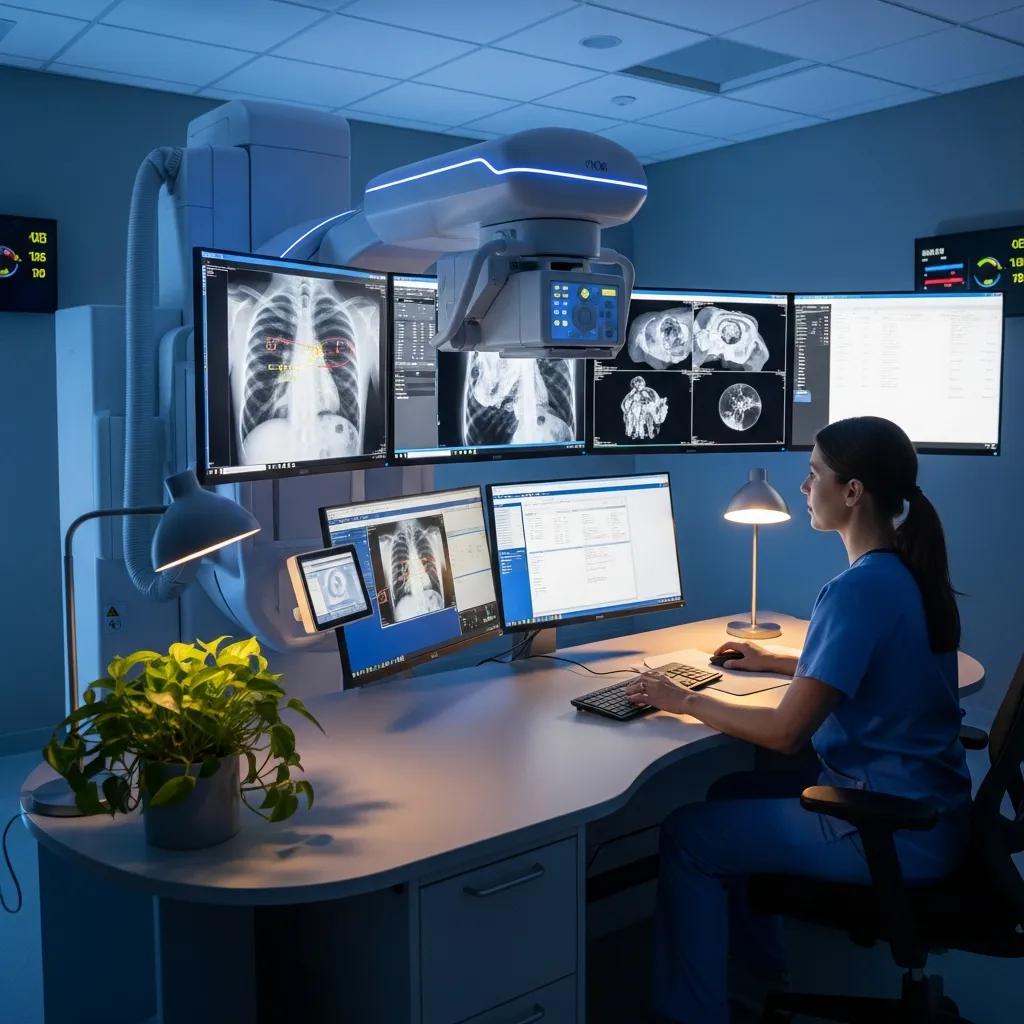
Digital X-Ray Reporting for Faster, More Accurate Radiology Workflows
Digital X-Ray Reporting is revolutionizing the way radiology workflows operate, offering enhanced efficiency and accuracy in diagnostic imaging. This article delves into the mechanisms and benefits of digital x-ray reporting, providing insights into how it can streamline processes for both healthcare providers and patients. As the demand for rapid and precise diagnostic services grows, understanding the advantages of digital solutions becomes crucial. This guide will explore the definition of digital x-ray reporting, its impact on workflow, the benefits for patients and providers, and how Tesla Radiological Services implements these technologies. Additionally, we will discuss the technologies that power these solutions and how patients can securely access their reports online.
What is Digital X-Ray Reporting and How Does It Improve Radiology Workflow?
Digital X-Ray Reporting refers to the process of capturing, storing, and sharing radiographic images electronically, which significantly enhances the efficiency of radiology workflows. This system allows for immediate access to images and reports, reducing the time between examination and diagnosis. By digitizing the reporting process, healthcare providers can streamline their operations, minimize errors, and improve patient outcomes. The integration of digital technologies in radiology not ably expedites the workflow but also enhances the overall quality of care delivered to patients.
Definition and Process of Digital Radiology Reporting
Digital radiology reporting involves the use of advanced imaging technologies to capture x-ray images, which are then processed and stored in a digital format. This process typically includes the following steps:
- Image Acquisition: X-ray images are captured using digital detectors.
- Image Processing: The images are processed using specialized software to enhance clarity and detail.
- Storage and Retrieval: Processed images are stored in a Picture Archiving and Communication System (PACS), allowing for easy retrieval and sharing.
- Reporting: Radiologists analyze the images and generate reports that can be accessed electronically by healthcare providers and patients.
This streamlined process not only saves time but also reduces the likelihood of lost or damaged physical films, ensuring that critical diagnostic information is readily available.
How Digital Reporting Enhances Diagnostic Accuracy and Speed
Digital reporting significantly improves diagnostic accuracy and speed through several mechanisms. First, the use of high-resolution digital images allows radiologists to detect subtle abnormalities that may be missed in traditional film-based systems. Additionally, digital tools facilitate the use of advanced algorithms and artificial intelligence (AI) to assist in image analysis, further enhancing diagnostic precision. Studies have shown that digital reporting can reduce the time taken to generate reports, allowing for quicker clinical decision-making and improved patient care.
What Are the Benefits of Digital Radiology Solutions for Patients and Providers?

Digital radiology solutions offer numerous benefits for both patients and healthcare providers, enhancing the overall healthcare experience.
- Improved Access to Information: Patients can access their x-ray results online, providing them with timely information about their health.
- Enhanced Communication: Digital systems facilitate better communication between healthcare providers, leading to more coordinated care.
- Cost-Effectiveness: By reducing the need for physical storage and improving workflow efficiency, digital solutions can lower operational costs for healthcare facilities.
How Do Patients Access and Use Online X-Ray Results Securely?
Patients can securely access their online x-ray results through dedicated patient portals provided by healthcare facilities. These portals typically require secure login credentials, ensuring that only authorized individuals can view sensitive medical information. Once logged in, patients can view their results, download reports, and communicate with their healthcare providers regarding any questions or concerns.
Beyond convenience, the implementation of online patient portals also offers significant economic advantages for both patients and healthcare institutions, as highlighted by research.
Online Portals for Radiology Reports: Patient & Hospital Benefits
Considering the overall costs sustained to implement a web portal which allows users a personal access to their own reports, if all users would have accessed/downloaded their exams, an overall users’ and hospital savings up to €255,808.28 could have been determined. The use of a web portal could represent a consistent economical advantage for the user, the hospital and the environment.
Patient access to an online portal for outpatient radiological images and reports: two years’ experience, P Piselli, 2017
How Do Healthcare Providers Benefit from Teleradiology Services?

Teleradiology services allow healthcare providers to send and receive radiological images and reports remotely, which is particularly beneficial for facilities that may not have on-site radiologists. This service enhances efficiency by enabling faster consultations and diagnoses, especially in emergency situations. Additionally, teleradiology expands access to specialized radiological expertise, improving the quality of care for patients in underserved areas.
How Does Tesla Radiological Services Implement Teleradiology Outsourcing?
Tesla Radiological Services (TRS) leverages teleradiology outsourcing to enhance its diagnostic capabilities and improve patient care. By partnering with expert radiologists, TRS ensures that patients receive timely and accurate interpretations of their imaging studies. This approach not only optimizes workflow but also allows for a broader range of services to be offered, catering to both private and medical aid patients.
Overview of Tesla’s Remote Radiology Reporting Services
TRS provides comprehensive remote radiology reporting services that include a variety of diagnostic imaging modalities such as X-rays, CT scans, and MRIs. These services are designed to be accessible and efficient, ensuring that patients receive prompt feedback on their imaging studies. The integration of advanced technology in TRS’s reporting process allows for seamless communication between radiologists and referring physicians, enhancing the overall patient experience.
Expert Radiologists and Fast Turnaround Times at Tesla Radiology
At TRS, a team of highly qualified radiologists is dedicated to providing fast turnaround times for imaging reports. This commitment to efficiency is supported by the use of state-of-the-art technology and streamlined workflows, ensuring that patients receive timely diagnoses. The expertise of TRS’s radiologists, combined with their focus on rapid reporting, positions them as a leader in the field of digital radiology.
Which Technologies Power Digital X-Ray Reporting and Workflow Optimization?
Several key technologies underpin digital x-ray reporting and workflow optimization, enhancing the efficiency and effectiveness of radiological services.
- PACS (Picture Archiving and Communication System): This system allows for the storage, retrieval, and sharing of digital images, facilitating seamless access for healthcare providers.
- RIS (Radiology Information System): RIS manages patient data and workflow, streamlining the administrative aspects of radiology.
- AI in Radiology: Artificial intelligence tools assist radiologists in image analysis, improving diagnostic accuracy and efficiency.
Role of PACS and RIS Systems in Digital Radiology Workflow
PACS and RIS systems play a crucial role in the digital radiology workflow by enabling the efficient management of imaging data. PACS allows for the storage and retrieval of images, while RIS manages patient information and scheduling. Together, these systems create a cohesive environment that enhances the overall efficiency of radiological services.
Further enhancing these foundational systems, the integration of artificial intelligence into PACS is actively being explored to revolutionize medical imaging and diagnostic workflows.
AI Integration in PACS for Enhanced Radiology Workflow
To examine the integration of artificial intelligence (AI) into Picture Archiving and Communication Systems (PACS) and assess its impact on medical imaging, diagnostic workflows, and patient outcomes. This review explores the technological evolution, key advancements, and challenges associated with AI-enhanced PACS in healthcare settings.
Transforming medical imaging: the role of artificial intelligence integration in PACS for enhanced diagnostic accuracy and workflow efficiency, AI Pérez-Sanpablo, 2025
How AI and Structured Reporting Enhance Radiology Efficiency
AI technologies are increasingly being integrated into radiology workflows to enhance efficiency and accuracy. By automating routine tasks and assisting in image analysis, AI allows radiologists to focus on more complex cases. Structured reporting, which standardizes the format of radiology reports, further improves communication and reduces variability in reporting, leading to better patient outcomes.
Indeed, studies consistently demonstrate that AI has already delivered tangible improvements in diagnostic accuracy, efficiency, and the standardization of radiology workflows.
AI Gains in Radiology Accuracy & Workflow Efficiency
AI has already demonstrated measurable gains in diagnostic accuracy, efficiency, and workflow standardization. Interventional applications are emerging, with future growth expected in guidance, robotics, and real-time optimization. Despite progress, key limitations includ
AI in radiology and interventions: a structured narrative review of workflow automation, accuracy, and efficiency gains of today and what’s coming, M Friebe, 2025
How Can Patients Securely Access and Share Their Digital X-Ray Reports Online?
Patients can easily access and share their digital x-ray reports through secure online portals provided by healthcare facilities. These portals are designed to protect patient privacy while allowing for convenient access to medical information.
Step-by-Step Guide to Using Tesla’s Online Patient Portal
To access their x-ray reports through Tesla’s online patient portal, patients can follow these steps:
- Visit the Portal: Navigate to the Tesla Radiological Services patient portal.
- Log In: Enter your secure login credentials.
- Access Reports: Click on the ‘Reports’ section to view your x-ray results.
- Download or Share: Patients can download their reports or share them with their healthcare providers directly through the portal.
Data Security Measures and Compliance in Online Radiology Reporting
Tesla Radiological Services prioritizes data security and compliance with regulations to protect patient information. The online portal employs encryption and secure access protocols to ensure that sensitive data remains confidential. Compliance with healthcare regulations further reinforces the commitment to safeguarding patient privacy.
What Are Common Questions About Digital X-Ray Reporting and Online Access?
As digital x-ray reporting becomes more prevalent, patients and providers often have questions regarding its implementation and benefits.
What is Teleradiology and How Does It Work?
Teleradiology is the process of transmitting radiological images and reports electronically from one location to another. This technology allows radiologists to provide interpretations remotely, facilitating faster diagnoses and consultations. Teleradiology is particularly beneficial for healthcare facilities that may not have on-site radiologists, ensuring that patients receive timely care regardless of their location.
How Does Digital Radiology Reduce Patient Wait Times?
Digital radiology significantly reduces patient wait times by streamlining the imaging and reporting process. With immediate access to digital images and the ability to share them electronically, healthcare providers can expedite the diagnostic process. Studies indicate that facilities utilizing digital radiology experience shorter turnaround times for imaging reports, leading to quicker clinical decisions and improved patient satisfaction.