
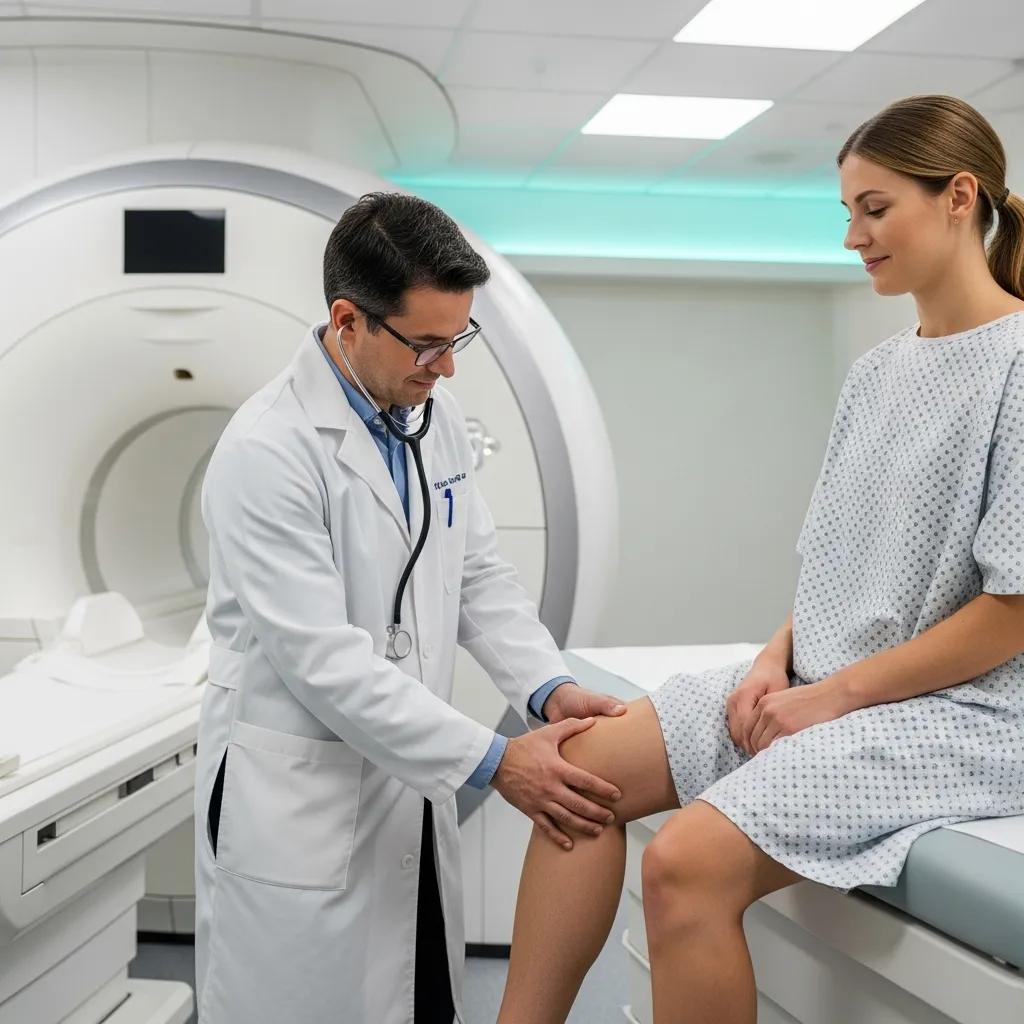
Knee Injury Scan Types: Which Imaging Procedure Will Your Doctor Order and Why?
Medically reviewed by a radiologist at Tesla Radiological Services, Pretoria, Gauteng.
When it comes to diagnosing knee injuries, accurate imaging is essential for effective treatment and recovery. At Tesla Radiological Services in Pretoria, Gauteng, our HPCSA-registered radiologists specialise in orthopaedic imaging, providing expert interpretation of scans such as knee injury MRI, X-rays, CT scans, and ultrasounds. This article offers a comprehensive guide to the various scan types for knee injury, helping patients and healthcare providers understand when and why each imaging modality is used.
Understanding Common Knee Injuries That Require Imaging
Types of Knee Injuries
Knee injuries often involve damage to ligaments, cartilage, or bone. The most frequent injuries include ACL tears, meniscus injuries, MCL (medial collateral ligament) injuries, and cartilage damage. These injuries can result from sports, falls, or degenerative changes and often cause pain, swelling, instability, or limited movement.
Why Imaging Is Important
Imaging helps confirm the diagnosis, assess the severity of the injury, and guide treatment plans. For example, a knee ligament injury scan can reveal the extent of an ACL tear, while a knee cartilage scan can detect cartilage wear or defects that may not be visible on X-rays.
When to Choose X-ray, MRI, or Ultrasound for Knee Injuries
Knee X-ray vs MRI: When to Use Each
A knee x-ray vs MRI decision depends on the suspected injury. X-rays are typically the first imaging step to detect fractures, bone alignment, and joint space narrowing. They are quick, widely available, and cost-effective. However, X-rays cannot visualise soft tissues like ligaments or cartilage.
In contrast, a knee injury MRI provides detailed images of soft tissues, including ligaments (ACL, MCL), menisci, and cartilage. MRI is the preferred scan for diagnosing ligament tears, meniscus injuries, and cartilage damage.
Role of Ultrasound in Knee Injury Imaging
Ultrasound is useful for assessing superficial soft tissue injuries, guiding injections, and evaluating joint effusions. It is less commonly used for deep ligament injuries but can complement other imaging modalities in certain cases.
What ACL, MCL, Meniscus, and Cartilage Injuries Look Like on Scans
ACL and MCL Tears on MRI
An ACL tear appears on MRI as discontinuity or abnormal signal intensity within the ligament, often accompanied by surrounding swelling. MCL injuries show similar changes but on the medial side of the knee. MRI is highly sensitive in detecting partial or complete ligament tears.
Meniscus Injury on MRI
A meniscus injury typically shows as a tear or abnormal signal within the meniscal cartilage on MRI. Meniscus tears can cause knee locking or catching sensations and are best visualised with MRI scans.
Knee Cartilage Scan Findings
Cartilage damage or degeneration appears as thinning, fissures, or defects on MRI. A knee cartilage scan helps evaluate the extent of cartilage loss, which is crucial for planning orthopaedic interventions.
Preparing for a Knee MRI in South Africa
Pre-Scan Instructions
Preparation for a knee MRI at Tesla Radiological Services in Pretoria involves:
- Wearing comfortable, metal-free clothing.
- Removing all jewellery and metal objects.
- Informing the radiologist or technician about any medical conditions, allergies, or implants.
- Fasting is generally not required unless contrast is used, in which case specific instructions will be provided.
What to Bring
Bring your referral letter from your GP or orthopaedic specialist, medical aid details, and any previous imaging reports if available.
What to Expect During Your Knee MRI Scan at Tesla Radiology Pretoria
Procedure Overview
The knee MRI scan is a painless procedure that typically lasts 30 to 60 minutes. You will lie on a comfortable table that slides into the MRI machine. It is important to remain still to ensure clear images. The machine produces loud knocking sounds, and ear protection is provided.
Post-Scan Process
After the scan, the images are reviewed by our HPCSA-registered radiologists who specialise in orthopaedic imaging Pretoria. A detailed report is prepared and sent to your referring doctor to guide treatment.
How Long Do Results Take and What Does the Report Mean?
Turnaround Time for Reports
At Tesla Radiological Services, knee MRI and X-ray reports are typically available within 24 to 48 hours. Complex cases may take longer depending on the findings.
Understanding Your Report
The radiologist’s report will describe the findings, such as the presence of an ACL tear, meniscus injury, or cartilage damage. It will also include recommendations for further management or follow-up imaging if necessary. Your doctor will discuss the report with you and explain the next steps.
Cost and Medical Aid Coverage for Knee Scans in South Africa
Typical Costs
The cost of a knee injury MRI in South Africa varies depending on the facility and scan complexity but generally ranges from R3,000 to R6,000. X-rays are more affordable, usually between R500 and R1,500.
Medical Aid Coverage
Most medical aids cover knee scans when referred by a GP or orthopaedic specialist. Coverage depends on your specific plan and whether pre-authorisation is obtained. Tesla Radiological Services works with medical aids to facilitate claims and authorisations.
Frequently Asked Questions
What scan is best for a knee injury?
The best scan depends on the injury suspected. X-rays are ideal for fractures, while MRI is preferred for ligament, meniscus, and cartilage injuries. Ultrasound may be used for soft tissue assessment and guided injections.
Does medical aid cover a knee MRI?
Many medical aids cover knee MRI scans if referred by a GP or specialist and pre-authorised. It is advisable to check with your medical aid provider before the scan.
How long does a knee MRI take?
A knee MRI typically takes between 30 and 60 minutes, depending on the sequences required and whether contrast is used.
Can an X-ray show ligament damage?
No, X-rays cannot directly show ligament damage. They are useful for detecting bone fractures and joint alignment but soft tissue injuries require MRI for accurate visualisation.
Do I need a referral for a knee scan in South Africa?
Yes, a referral from a GP or orthopaedic specialist is usually required for medical aid authorisation and to ensure the correct imaging is performed.
Book Your Knee Scan at Tesla Radiological Services Pretoria
For expert orthopaedic imaging in Gauteng, trust Tesla Radiological Services. Our HPCSA-registered radiologists provide accurate diagnosis and detailed reports to support your treatment journey. Whether you need a knee injury MRI, X-ray, or ultrasound, we offer professional, patient-centred care with quick turnaround times.