

Radiology Documentation: Structured Reporting & Compliance Services
Radiology documentation services play a crucial role in the healthcare landscape, ensuring that patient imaging data is accurately captured and communicated. This comprehensive guide will delve into the significance of these services, the benefits of structured reporting, and the essential components of high-quality medical imaging reports. Healthcare providers often face challenges in maintaining compliance and ensuring that documentation meets legal standards. By understanding the intricacies of radiology documentation, providers can enhance patient care and streamline their operations. This article will cover the definition and importance of radiology documentation services, the advantages of structured reporting, the key components of medical imaging reports, compliance guidelines, teleradiology standards, and the role of AI tools in optimizing documentation quality.
What Are Radiology Documentation Services and Why Do They Matter?
Radiology documentation services encompass the processes and systems used to create, manage, and store imaging reports and related documentation. These services are vital for ensuring that patient care is informed by accurate and timely information. Effective documentation supports healthcare providers in making informed decisions, ultimately enhancing patient outcomes.
The importance of radiology documentation services cannot be overstated. Accurate documentation not only facilitates better communication among healthcare professionals but also plays a critical role in legal compliance and billing processes. By ensuring that reports are clear and comprehensive, healthcare providers can reduce the risk of errors and improve the overall quality of care.Tesla Radiology Services offers a comprehensive suite of medical imaging procedures, including X-rays, ultrasounds, CT scans, MRI, and fluoroscopy. The company emphasizes affordability and caters to both private and medical aid patients across multiple South African locations. They provide specialized services such as imaging for Workmen’s Compensation Act (WCA) claims, immigration/emigration imaging, and occupational medical imaging.
Defining Radiology Documentation and Its Role in Patient Care
Radiology documentation refers to the systematic recording of imaging findings, interpretations, and recommendations. This documentation is essential for patient care as it provides a clear record of the diagnostic process. Accurate documentation ensures that healthcare providers have access to critical information when making treatment decisions, thereby improving patient safety and outcomes.
The role of radiology documentation extends beyond mere record-keeping. It serves as a communication tool between radiologists and referring physicians, facilitating a shared understanding of patient conditions and treatment plans. This collaborative approach is vital for ensuring that patients receive timely and appropriate care.
How Accurate and Timely Reports Support Healthcare Providers
Timely and accurate radiology reports are crucial for effective patient management. Delays in reporting can lead to missed diagnoses and delayed treatments, negatively impacting patient outcomes. Research indicates that timely reporting significantly reduces the likelihood of errors and enhances the overall quality of care.
Healthcare providers benefit from accurate reports as they provide essential information for making informed treatment decisions. By relying on well-documented findings, providers can minimize the risk of miscommunication and ensure that patients receive the best possible care.
How Does Structured Radiology Reporting Improve Diagnostic Accuracy?
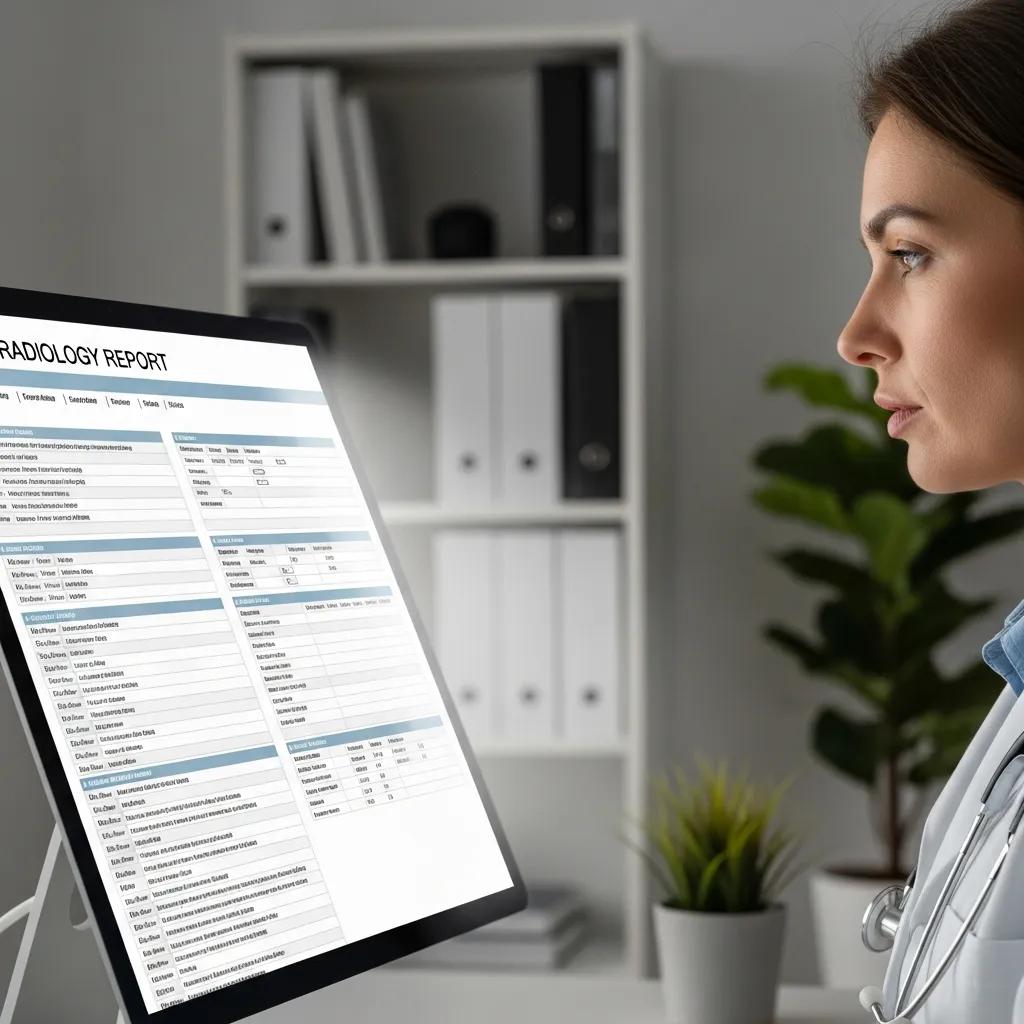
Structured radiology reporting involves the use of standardized templates to create imaging reports. This approach enhances diagnostic accuracy by ensuring that all relevant information is consistently captured and presented in a clear format.
The benefits of structured reporting extend to both radiologists and referring physicians. By using standardized templates, radiologists can streamline their reporting processes, reducing the time spent on documentation. This efficiency allows them to focus more on interpreting images and providing valuable insights to referring physicians.
What Are the Benefits of Using Standardized Radiology Report Templates?
Standardized radiology report templates offer several advantages, including improved consistency and clarity in reporting. By following a predefined structure, radiologists can ensure that all necessary components are included in each report, reducing the risk of omissions or errors.
Further emphasizing these advantages, research highlights how structured reporting creates standardized databases that enhance data utilization and patient safety.
Benefits of Structured Reporting for Radiology Data & Patient Safety
Structured reporting offers a number of theoretical advantages, perhaps the most important of which is creation of standardized report databases. The standardized data created can in turn be used to customize data display, report content, historical data retrieval, interpretation analysis, and results communication in both a context and user-specific manner. In addition, these referenceable report databases can be used to facilitate the practice of evidence based medicine, through data-driven meta-analysis and determination of best practice guidelines. This concept will only be realized if the customized data delivery technology provides real and tangible value to end users, accentuates workflow, can be seamlessly integrated into existing information system technologies, and be shown to yield reproducibility of the evidence domain. The time is here for the medical imaging and clinical communities to embrace this vision in order to improve clinical outcomes and patient safety.
Customization of medical report data, 2010
Additionally, standardized templates facilitate better communication between radiologists and referring physicians. Clear and concise reports enable physicians to quickly grasp the key findings and make informed decisions regarding patient care. This improved communication ultimately leads to enhanced patient outcomes.
How Do Structured Reports Enhance Communication Between Radiologists and Referring Physicians?
Structured reports enhance communication by providing a clear and organized presentation of imaging findings. This clarity allows referring physicians to easily understand the implications of the results and make timely decisions regarding patient management.
Moreover, structured reporting reduces the likelihood of follow-up queries from referring physicians, as the reports are designed to be comprehensive and self-explanatory. This efficiency not only saves time for both radiologists and physicians but also contributes to a more streamlined patient care process.
What Are the Essential Components of a High-Quality Medical Imaging Report?
A high-quality medical imaging report should include several essential components to ensure that it meets the needs of healthcare providers and patients alike. These components include patient demographics, clinical history, imaging findings, impressions, and recommendations.
The importance of each component cannot be overstated. Patient demographics provide context for the imaging study, while clinical history helps radiologists understand the reasons for the examination. Clear documentation of findings, impressions, and recommendations is crucial for guiding treatment decisions and ensuring continuity of care.
Which Patient and Clinical Information Must Be Included?
When creating a medical imaging report, it is essential to include specific patient and clinical information. This information typically encompasses:
- Patient Demographics: Name, age, gender, and medical record number.
- Clinical History: Relevant medical history, symptoms, and indications for imaging.
- Indications for Imaging: The specific reasons for the imaging study, which help contextualize the findings.
Including this information ensures that the report is comprehensive and provides a clear understanding of the patient’s condition.
How Should Findings, Impressions, and Recommendations Be Documented?
Documenting findings, impressions, and recommendations in a structured manner is critical for effective communication. Findings should be presented clearly, with a focus on the most relevant observations. Impressions should summarize the key takeaways from the imaging study, while recommendations should provide actionable insights for further management.
For example, a well-documented report might state the findings of a CT scan, summarize the impressions regarding potential diagnoses, and offer recommendations for follow-up imaging or referrals to specialists. This structured approach enhances the utility of the report for healthcare providers.
How Do Radiology Documentation Guidelines Ensure Compliance and Legal Protection?
Radiology documentation guidelines are essential for ensuring compliance with regulatory standards and protecting healthcare providers from legal liabilities. These guidelines outline the necessary components of imaging reports and establish best practices for documentation.
Compliance with these guidelines is crucial for maintaining the integrity of the healthcare system. Failure to adhere to documentation standards can result in legal repercussions, including malpractice claims and penalties from regulatory bodies.
What Are Key Regulatory Standards Like HIPAA, GDPR, and CMS in Radiology Reporting?
Key regulatory standards such as HIPAA (Health Insurance Portability and Accountability Act), GDPR (General Data Protection Regulation), and CMS (Centers for Medicare & Medicaid Services) play a significant role in radiology reporting.
- HIPAA: Ensures the confidentiality and security of patient information, requiring healthcare providers to implement safeguards for protected health information (PHI).
- GDPR: Regulates the processing of personal data in the European Union, emphasizing the need for transparency and consent in data handling.
- CMS: Establishes guidelines for billing and reimbursement, ensuring that documentation supports medical necessity and compliance with payment policies.
Regarding patient data protection, studies have specifically examined the extent of compliance with regulations like HIPAA concerning patient access to their medical and imaging records.
HIPAA Compliance for Radiology Imaging & Patient Access
In the United States, patients have a right to access their protected health information under the Health Insurance Portability and Accountability Act. However, this access remains limited. The goal of this study is to evaluate U.S. hospital compliance with federal and state regulations that govern the medical records request process and to assess the ease of patient access to their medical records. First, between August 1 and December 7, 2017, we performed a cross-sectional analysis of the general medical records request processes of 83 top-ranked U.S. hospitals. Second, between June 6 and December 3, 2018, we performed a similar cross-sectional analysis of the radiology imaging request processes of 80 top-ranked U.S. hospitals.
Assessment Of Us Hospital Compliance With Regulations For Patients’ Requests For Medical Records And Radiology Imaging, 2022
Understanding these regulations is essential for healthcare providers to navigate the complexities of radiology documentation and maintain compliance.
How Does Compliance Impact Billing and Medical Necessity Documentation?
Compliance with documentation guidelines directly impacts billing and medical necessity. Accurate and thorough documentation is essential for justifying the need for imaging studies and ensuring appropriate reimbursement from payers.
Healthcare providers must ensure that their documentation meets the requirements set forth by regulatory bodies. Failure to do so can result in denied claims, financial losses, and potential legal issues. By adhering to compliance standards, providers can protect their financial interests while delivering high-quality patient care.
What Are Teleradiology Reporting Standards and How Do They Enhance Service Delivery?

Teleradiology reporting standards are designed to facilitate the remote transmission and interpretation of medical imaging studies. These standards ensure that imaging data is securely transmitted and that reports are generated in a timely manner.
The benefits of teleradiology are significant, particularly in enhancing access to specialized care. By enabling radiologists to interpret images from remote locations, teleradiology expands the reach of radiology services and improves patient access to timely diagnoses.
How Is Secure Transmission and Fast Turnaround Achieved in Remote Reporting?
Secure transmission of imaging data is achieved through the use of advanced encryption technologies and secure networks. These measures protect patient information during transmission, ensuring compliance with regulatory standards.
Fast turnaround times in teleradiology are facilitated by streamlined workflows and the use of specialized software that allows radiologists to efficiently access and interpret images. This efficiency is crucial for providing timely diagnoses and improving patient outcomes.
What Technologies Support Teleradiology Integration with PACS and RIS?
Teleradiology integration with Picture Archiving and Communication Systems (PACS) and Radiology Information Systems (RIS) is essential for seamless service delivery. Technologies such as cloud-based storage and advanced imaging software enable radiologists to access and interpret images from any location.
The integration of teleradiology with PACS and RIS enhances the overall efficiency of radiology departments, allowing for better management of imaging studies and improved communication among healthcare providers. This technological synergy is vital for delivering high-quality patient care.
How Can Radiology Report Templates and AI Tools Optimize Documentation Quality?
Radiology report templates and AI tools play a significant role in optimizing the quality of documentation. By providing standardized formats and leveraging advanced technologies, these tools enhance the accuracy and efficiency of radiology reporting.
The use of templates ensures that all necessary components are included in each report, reducing the risk of omissions and errors. AI tools can assist radiologists in generating reports by automating certain aspects of the documentation process, allowing them to focus on interpreting images.
What Role Does AI-Assisted Dictation and Image Analysis Play in Reporting?
AI-assisted dictation and image analysis are transforming the way radiologists create reports. AI technologies can analyze imaging data and provide preliminary findings, which radiologists can then review and incorporate into their reports.
This integration of AI not only speeds up the reporting process but also enhances the accuracy of findings. By leveraging AI tools, radiologists can improve the quality of their documentation and ensure that reports are comprehensive and reliable.
How Do Customizable Templates Ensure Consistency and Efficiency?
Customizable templates allow radiologists to tailor their reports to specific imaging studies and patient needs. This flexibility ensures that reports are both consistent and relevant, enhancing the overall quality of documentation.
By using customizable templates, radiologists can streamline their reporting processes, reducing the time spent on documentation while maintaining high standards of accuracy. This efficiency is crucial for meeting the demands of busy radiology departments and ensuring timely patient care.