
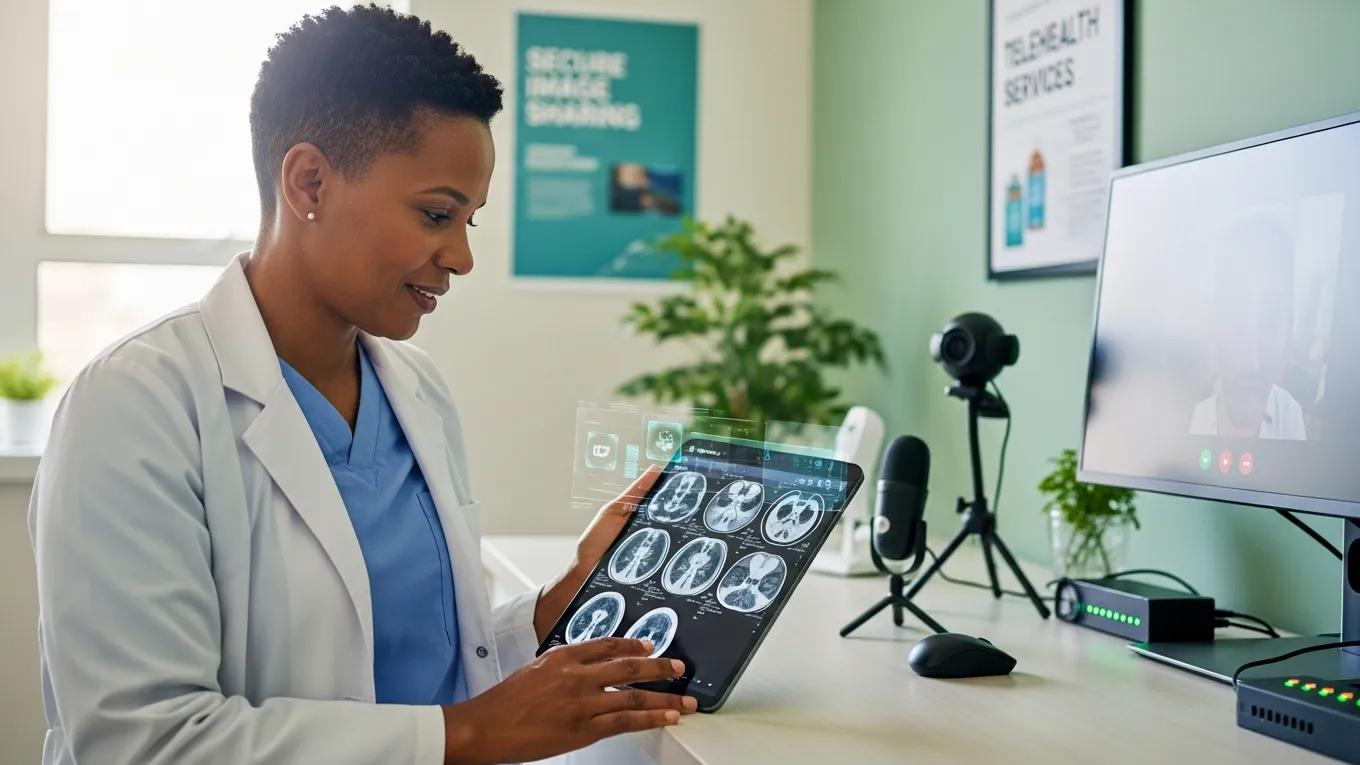
How Referring Doctors Can Securely Share Medical Images With Specialists: HIPAA-Compliant Transfer Methods and Telemedicine Workflows
By Tesla Radiological Services Team, Tesla Radiological Services
In the rapidly evolving landscape of healthcare, secure medical image sharing has become a crucial focus for medical professionals. Referring doctors often need to convey imaging data to specialists efficiently while complying with strict regulations such as HIPAA. This guide aims to explore various methods for secure medical image transfer, including encryption techniques and telemedicine workflows, while highlighting best practices for compliance. Establishing robust protocols not only protects patient information but also enhances the overall quality of care. As we delve deeper, we will cover essential HIPAA compliance requirements, challenges faced by referring doctors, encryption methods, and contemporary telemedicine security practices.
What Are the Essential HIPAA Compliance Requirements for Medical Image Sharing?

HIPAA, the Health Insurance Portability and Accountability Act, establishes guidelines designed to protect sensitive patient information. For medical image sharing, several essential compliance requirements must be met. These include ensuring the confidentiality and integrity of protected health information (PHI) during transmission and storage. Moreover, healthcare providers must implement administrative, physical, and technical safeguards to mitigate the risks associated with data breaches. Understanding these regulations is critical as non-compliance can lead to severe penalties, loss of trust, and compromised patient care.
What Are the Common Compliance Challenges Referring Doctors Face?
Referring doctors often encounter compliance challenges that can hinder their ability to share medical images securely. These challenges include:
- Understanding HIPAA regulations: Many practitioners struggle to keep up with the complexities of HIPAA requirements and how they apply to image sharing.
- Secure transmission methods: The lack of familiarity with secure transfer methods can lead to improper handling of sensitive data.
- Maintaining documentation standards: Ensuring proper documentation of each image transfer can be cumbersome but is vital for compliance.
Addressing these challenges is crucial for promoting secure collaboration within the healthcare ecosystem and protecting patient data effectively. For secure medical data sharing, it is vital for healthcare providers to understand secure medical image transfer protocols.
Which Encryption Methods Ensure Safety in Medical Image Transfer?
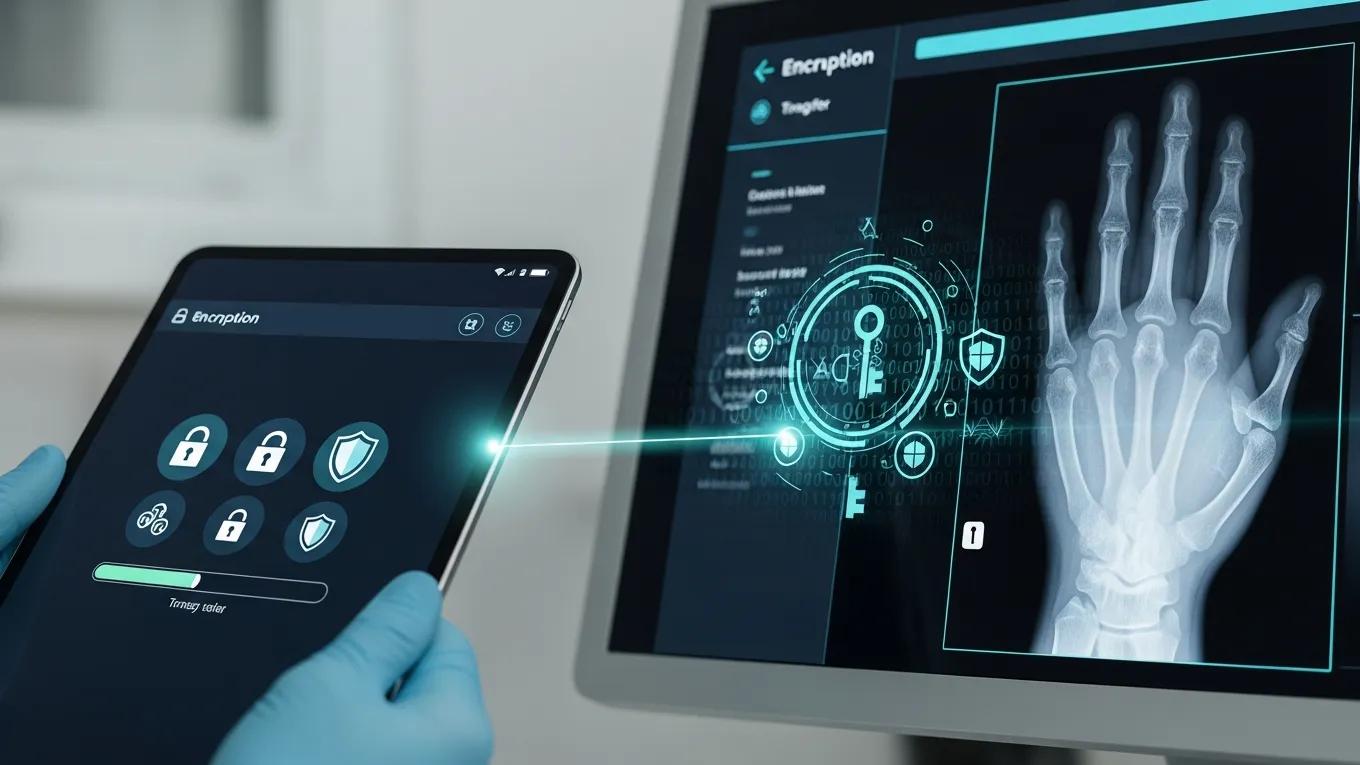
Encryption is a vital component of any secure medical image transfer process. Various encryption methods help safeguard medical data against unauthorized access while ensuring compliance with relevant regulations.
How Does Encryption Support Secure Telemedicine Consultations?
Encryption supports secure telemedicine consultations by providing a way to protect patient information during transmissions. This layer of security ensures that data remains confidential, only accessible to authorized individuals. Techniques such as Advanced Encryption Standard (AES) are widely adopted to protect electronic medical image sharing processes, ensuring that both images and accompanying patient information are securely encoded. The robust security mechanisms provided by these encryption standards instill confidence in both healthcare providers and patients as they engage in telehealth services.
Further research underscores the critical role of these protections.
Secure Medical Image Transmission in Telemedicine
Recently, there has been a rapid growth in the utilization of medical images in telemedicine applications. The authors in this paper presented a detailed discussion of different types of medical images and the attacks that may affect medical image transmission. This survey paper summarizes existing medical data security approaches and the different challenges associated with them. An in-depth overview of security techniques, such as cryptography, steganography, and watermarking are introduced with a full survey of recent research. The objective of the paper is to summarize and assess the different algorithms of each approach based on different parameters such as PSNR, MSE, BER, and NC.
Security of medical images for telemedicine: a systematic review, M Magdy, 2022
How Does the Medical Imaging Referral Process Facilitate Secure Specialist Consultations?
The medical imaging referral process is designed to facilitate secure communications between referring doctors and specialist consultants. This process involves carefully structured steps where image data and relevant patient information are transmitted efficiently and securely. By utilizing secure platforms and adhering to established protocols, healthcare providers can ensure that patient data is protected while achieving timely access to specialist services.
How Do Secure Platforms Manage Confidential Doctor-to-Specialist Image Transfers?
Secure platforms utilize a combination of encryption, authentication, and secure access controls to manage confidential doctor-to-specialist image transfers. These platforms integrate with existing medical record systems to streamline workflows and maintain data integrity. Implementing best practices, such as logging access attempts and using multi-factor authentication, can significantly enhance confidentiality throughout the transfer process. Adopting these measures builds trust amongst patients and healthcare providers, facilitating smoother collaboration.
What Telemedicine Data Security Practices Enhance Medical Image Sharing?
Telemedicine brings unique security challenges, especially concerning medical image sharing. Employing robust data security practices is essential to protect sensitive information.
What Are Best Practices for Protecting Patient Data in Telehealth Imaging?
Several best practices are critical for protecting patient data in telehealth imaging, including:
- Encryption during transmission: Always use advanced encryption protocols to secure images during transfers.
- Compliance with regulations: Regularly review and adapt practices to meet changing legal requirements.
- Regular staff training: Conduct ongoing training sessions to ensure all employees understand their roles in maintaining data security.
By focusing on these practices, referring doctors can enhance the safety of medical image sharing, thus improving patient outcomes and maintaining compliance. Exploring advanced telemedicine solutions can further fortify data security and streamline workflows for secure telemedicine consultations.
How Can Referring Doctors Efficiently Book Imaging Appointments While Maintaining Security?
Efficient booking of imaging appointments is vital for enhancing patient care while ensuring that security protocols are in place. Implementing secure systems can streamline appointment scheduling while protecting sensitive patient information. Leveraging technology, referring doctors can automate processes without compromising data security.
How Does Secure Booking Integrate With Medical Image Sharing Platforms?
Secure booking systems can seamlessly integrate with medical image sharing platforms to enhance workflow efficiency. By utilizing secure online portals, practitioners can manage appointments and ensure that all corresponding data remains encrypted throughout the process. This integration assists in minimizing operational delays and fosters better communication among healthcare providers, leading to improved patient experiences.
What Are the Benefits of Using Encrypted Medical Image Platforms for Referring Doctors and Specialists?
Utilizing encrypted medical image platforms provides numerous benefits for referring doctors and specialists, including enhanced patient confidentiality and expedited diagnoses. These platforms are crucial for ensuring secure doctor-to-specialist image transfers, maintaining data integrity throughout the process.
What Evidence Supports the Reliability of Encrypted Referral Workflows?
Recent studies have shown that encrypted referral workflows significantly reduce the risk of data breaches and improve data reliability. Feedback from healthcare providers indicates that platforms employing advanced encryption protocols lead to increased trust and faster decision-making processes. Comparing encrypted approaches with conventional methods reveals a marked improvement in both security and communication efficiency in the referral workflows.
Incorporating such encryption methods not only aids in compliance efforts but also fortifies the integrity of medical image sharing, paving the way for secure and efficient healthcare practices.
By embracing these practices and technologies, referring doctors can significantly improve the security of medical image sharing while fostering better communication with specialists, ultimately contributing to enhanced patient care.